The Archaeology of Introversion
Hadrian’s Teatro Marittimo and personality in the archaeological record
Straight after ‘have you found any gold?’, the second question most archaeologists hear is ‘what’s your favourite discovery?’, and it is a question I find strangely difficult to answer. My usual answer is to talk about sites where we found connections to individuals from the past that felt personal, where the centuries separating us from the people whose past we were investigating collapsed in a moment of recognition.
Some examples of this that come to mind are as simple as finding an unusual beautifully decorative stone with no discernible utilitarian purpose within a dense lithic assemblage in a sand dune. Or the site in the middle of the central business district, surrounded by office towers, where we uncovered duck boards hurriedly laid down by someone who needed to bring the washing in from a muddy backyard, a specific moment from the very earliest years of colonial Melbourne, frozen in time when the site was filled in the 1850s. There was the site in Ireland where we excavated coins beside the remains of women who had been killed and buried after their castle had been stormed in the seventeenth century – coins that had been sewn and concealed into their dresses as they hoped to flee the siege. I also remember another site we excavated at the exact location painted in an early nineteenth century depiction of an Aboriginal camp by the convict artist, and forger, Joseph Lycett.
I’m not entirely sure why these particular finds resonated with me, but they are the sorts of ‘discoveries’ that have definitely stayed with me over time. Perhaps it is an interest in looking for the idiosyncrasies of individual people in the archaeological record, either through the in situ fabric or via an individual artefact.
Hadrian’s Teatro Marittimo
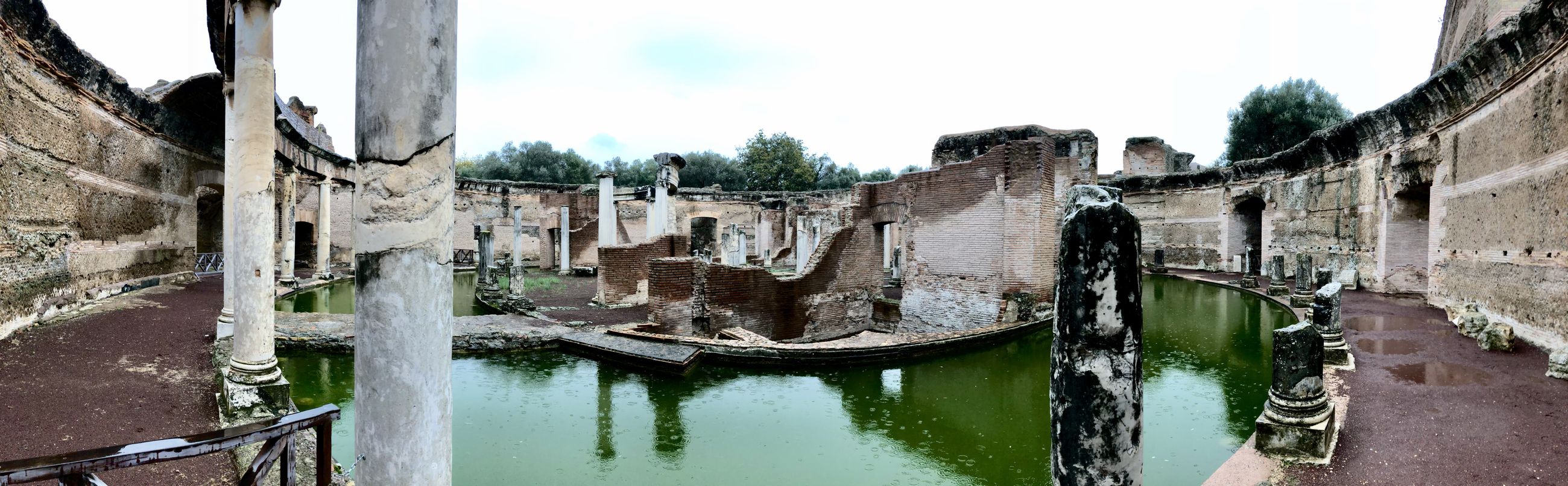
One of the very best examples of this archaeology of the individual can be found at the Teatro Marittimo, constructed by the second century Roman Emperor Hadrian within his sprawling Villa Adriana estate in the scenic hill country to the east of Rome. Built as part of the villa’s first construction phase between about 118 and 125 CE,1 the Teatro Marittimo, or Maritime Theatre, is a fully enclosed sanctuary physically secluded from the remainder of the villa complex and built to a very specific and eccentric design brief.
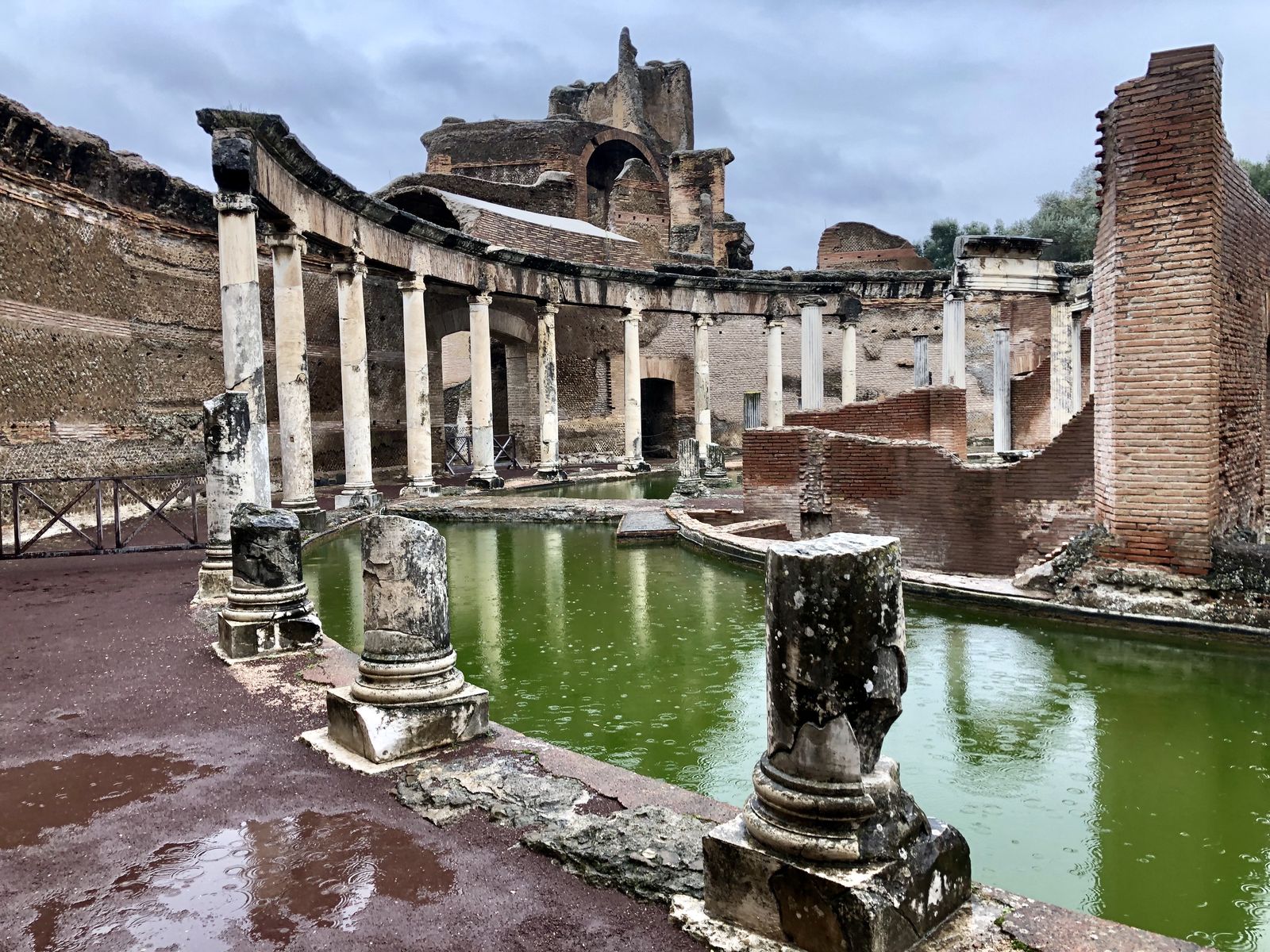
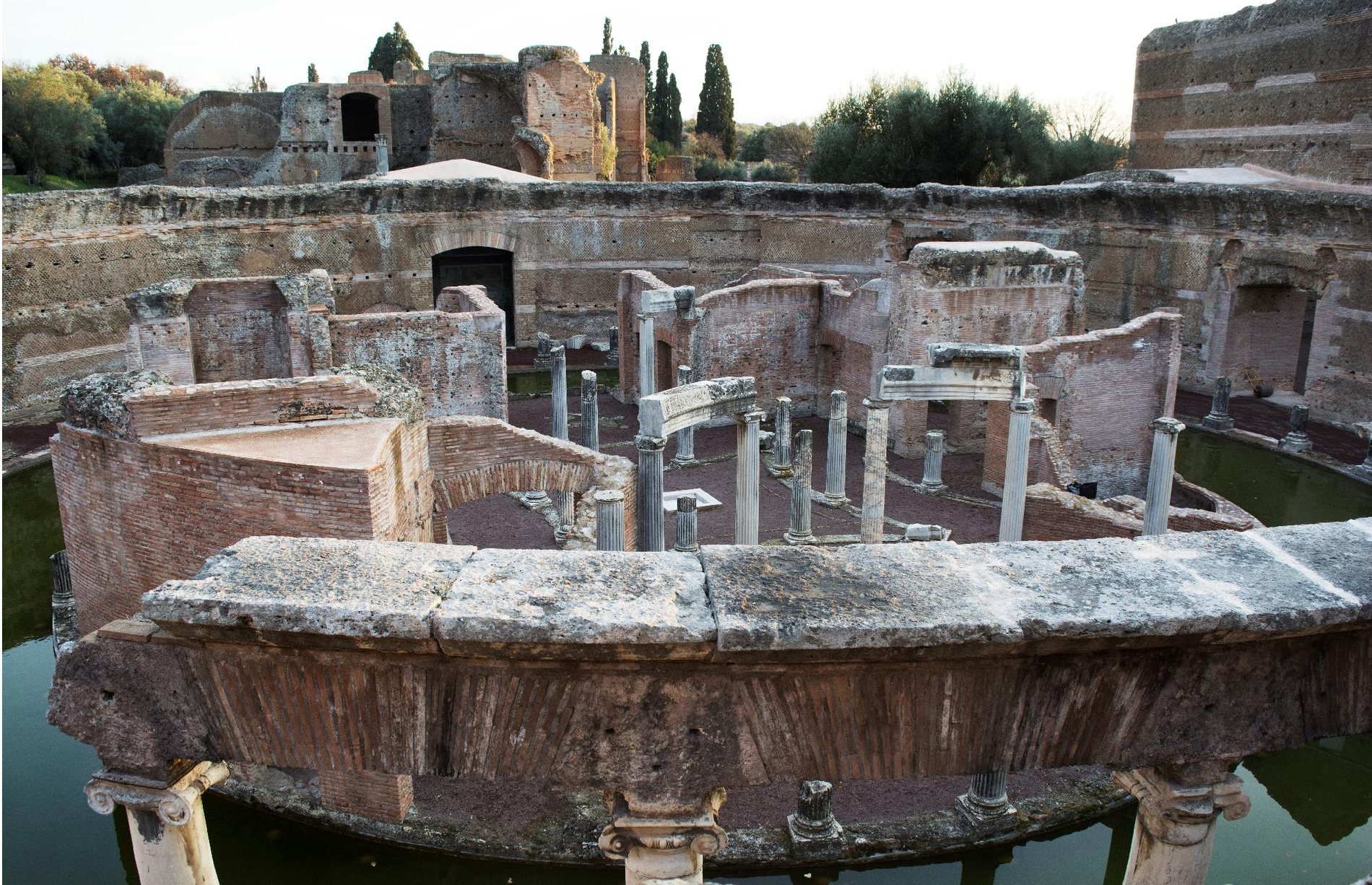
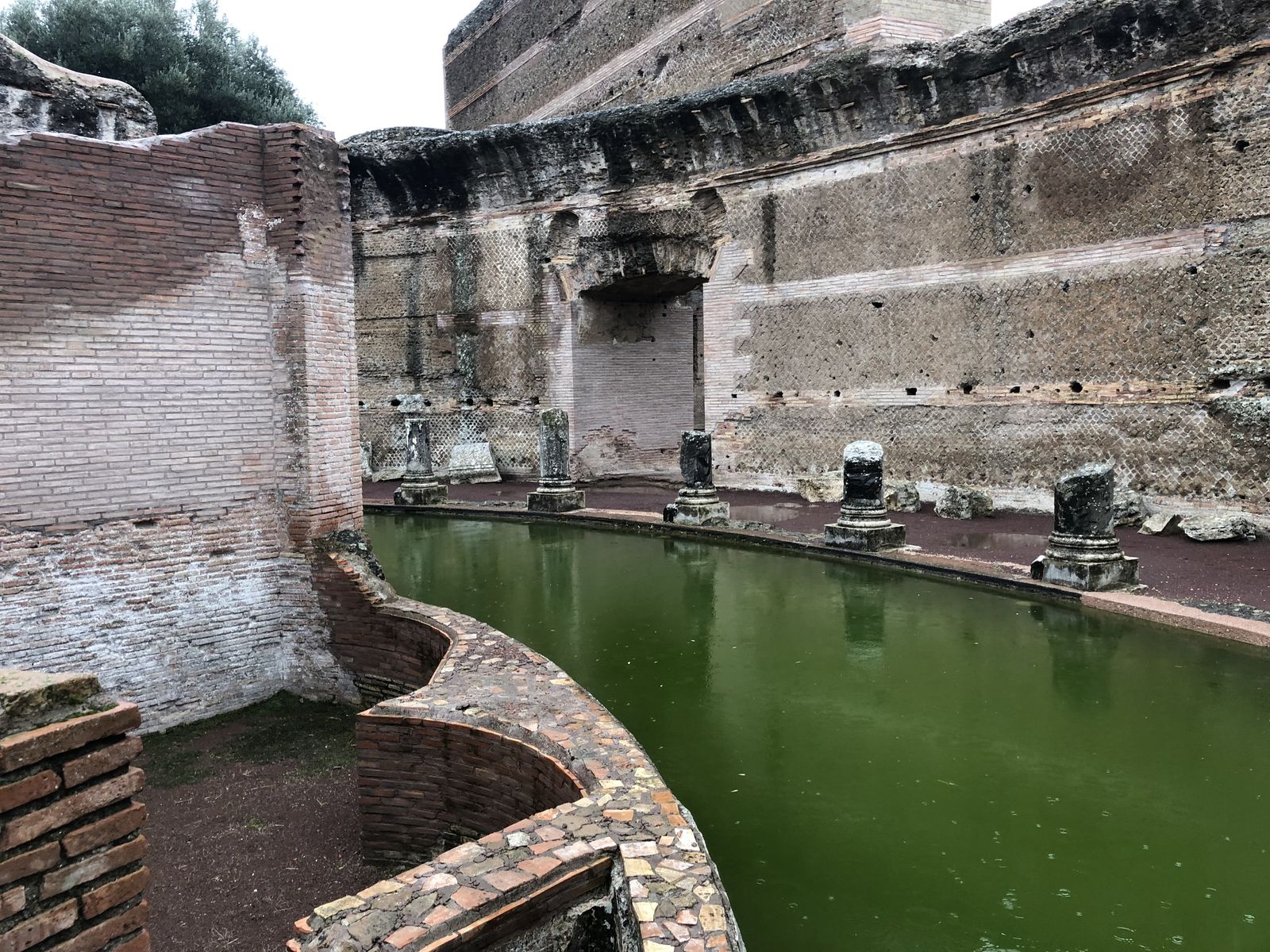
The interior of the sanctuary, surrounded by high walls, comprises a colonnaded perimeter walkway surrounding a circular moat. A miniature villa was constructed on an island in the middle of the moat, accessible only via two retractable timber bridges across the water – allowing Hadrian to control access and achieve complete isolation.2
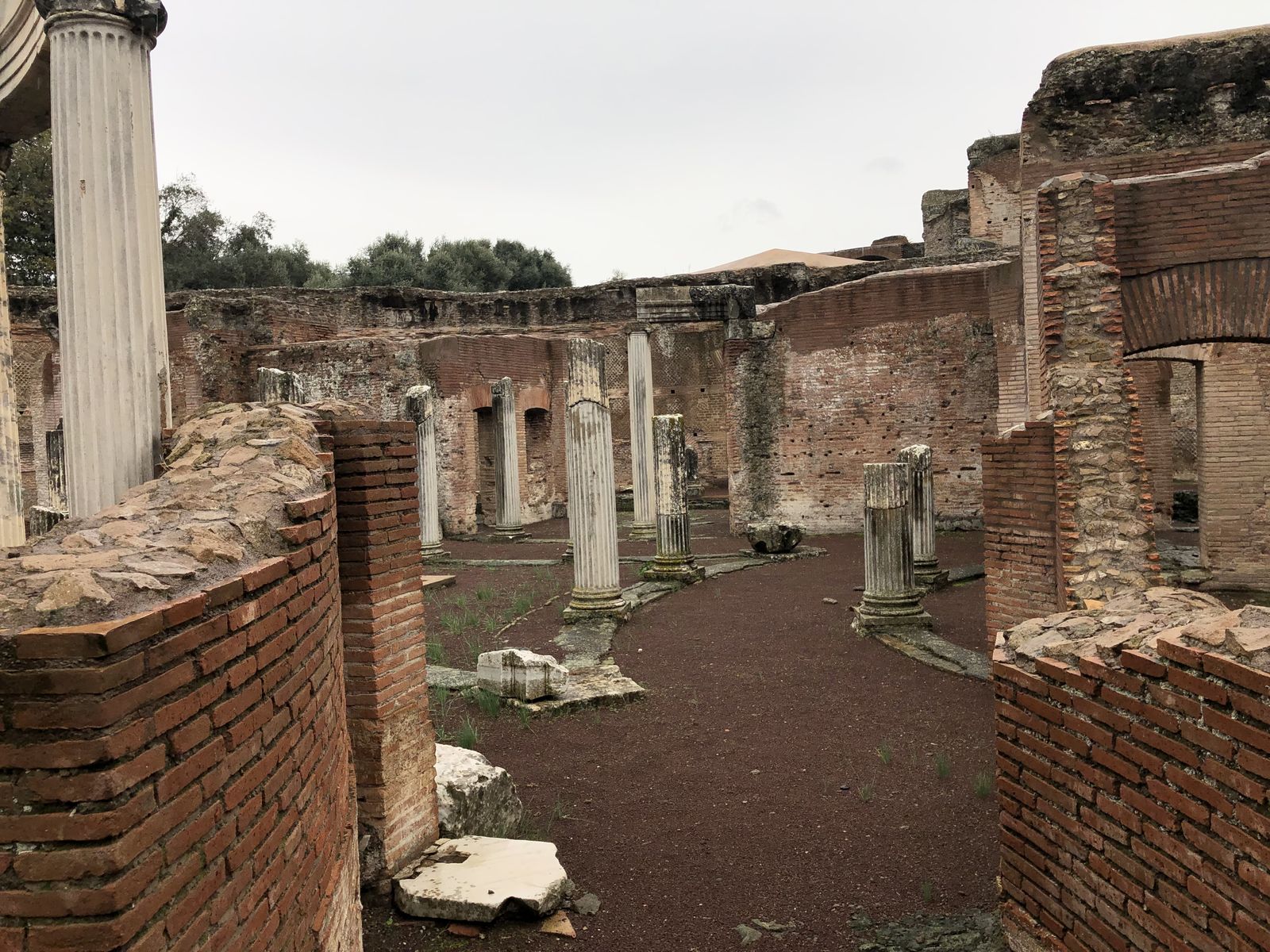
The villa floor plan covers approximately 314 square metres and holds a self-contained suite of two small bedrooms, an atrium and a triclinium. The villa came complete with a miniature yet fully self-contained bath complex featuring a cold plunge bath and separate hot and warm rooms heated by a small furnace and hypocaust system. Steps led down from the cold room directly into the moat, which doubled as Hadrian’s swimming pool.3
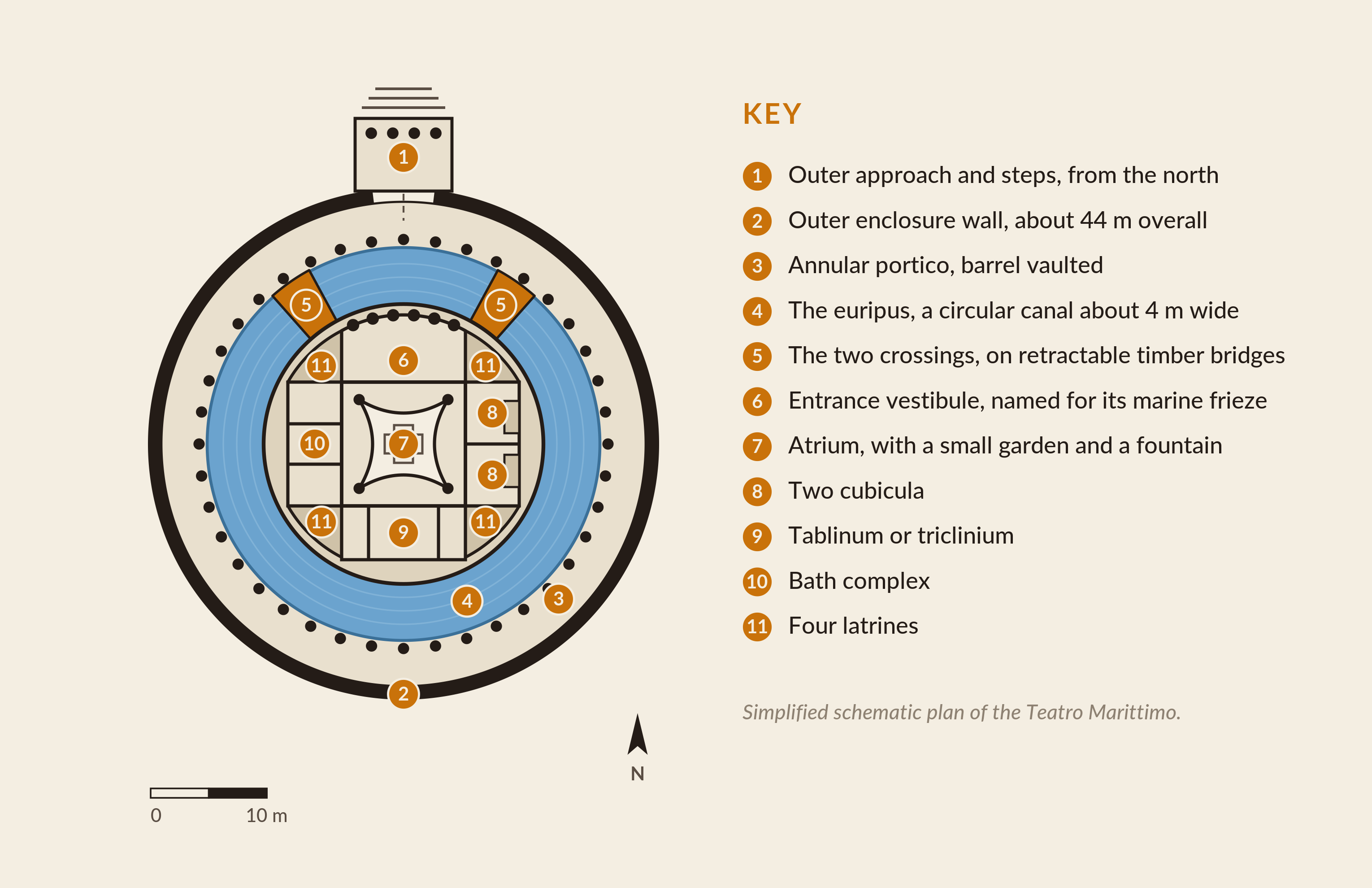
The island villa was comparable in size to the large project homes now going up in the outer growth suburbs of most Australian cities and was small by comparison to typical country Roman villas of the period. While the scale of the villa was modest, the craftsmanship and materials evident in the villa were of the very highest quality, including cipollino shipped from Euboea in Greece and Luna marble from the quarries at Carrara. These imported materials were supplemented with brick, concrete and locally quarried tufa and travertine from the Tivoli quarries4.
There was complex hydrological engineering at play in its construction, designed to keep the water in the moat clear and moving and to provide fresh water into the island itself to feed the bath suite, the latrines and a fountain.5
Great lengths were taken to enhance the sense of solitude across Hadrian’s Tivoli estate, with an extensive network of subterranean service tunnels employed to keep slaves and day to day utilitarian tasks hidden from view. New tunnels continue to be found, most recently with the help of specialist caving teams.6
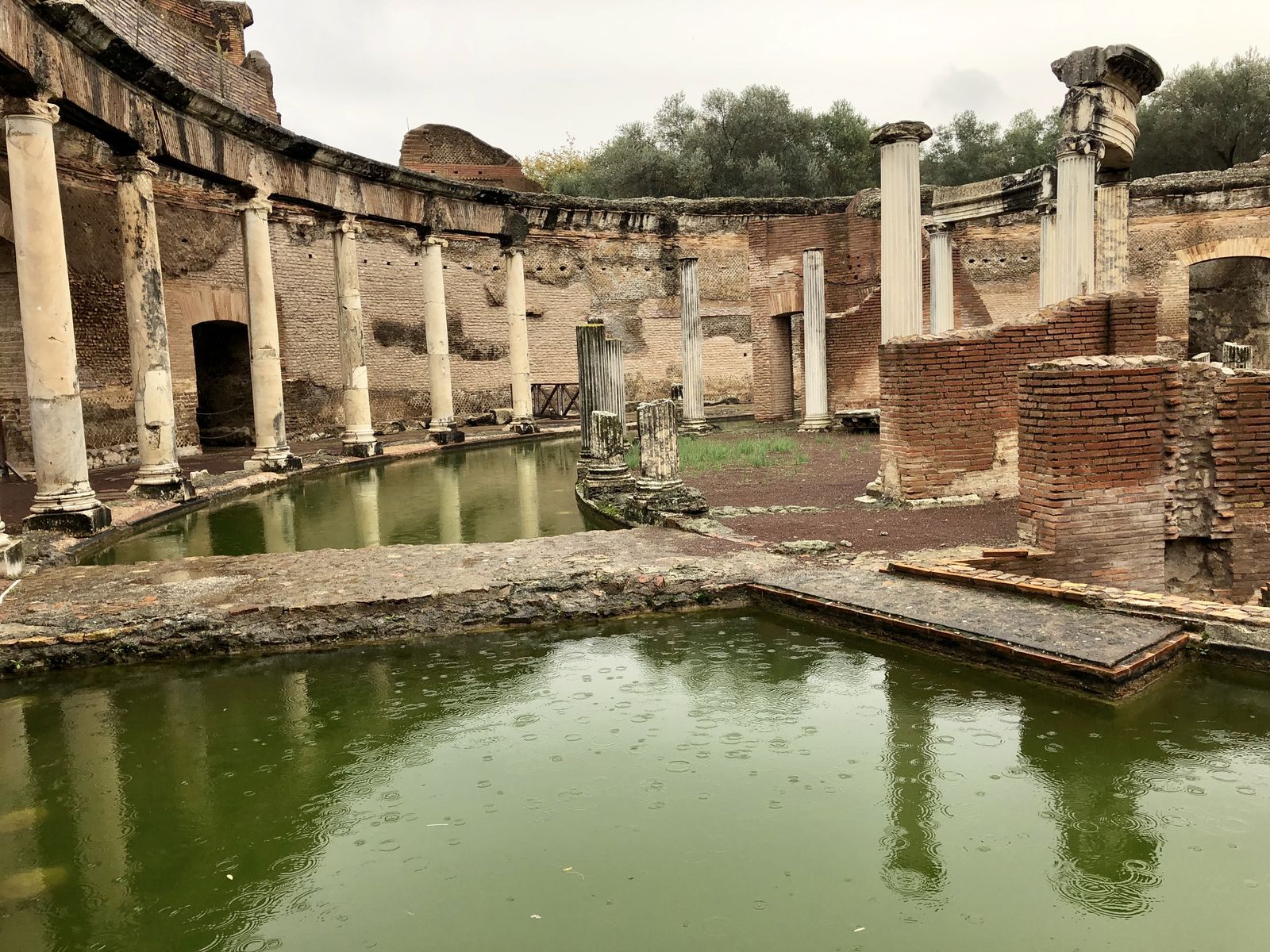
Even if you go in without any knowledge of the historical context, this highly personal and eccentric space has an immediate and profound impact. If you have the chance to visit on a quiet mid-week day, you can still experience a profound sense of quiet isolation, cut off from the noise and movement of the outside world. The high external walls are an unmistakable and impermeable barrier. The two bridge crossings are offset from the main entrance to the outer walkway, requiring those who sought to enter the island villa to deviate and enter via a circuitous route. The architectural bones, much restored but clearly legible, read as a place of retreat and solitude, and the sense of a personality escaping the world is strong.
What we know of the man
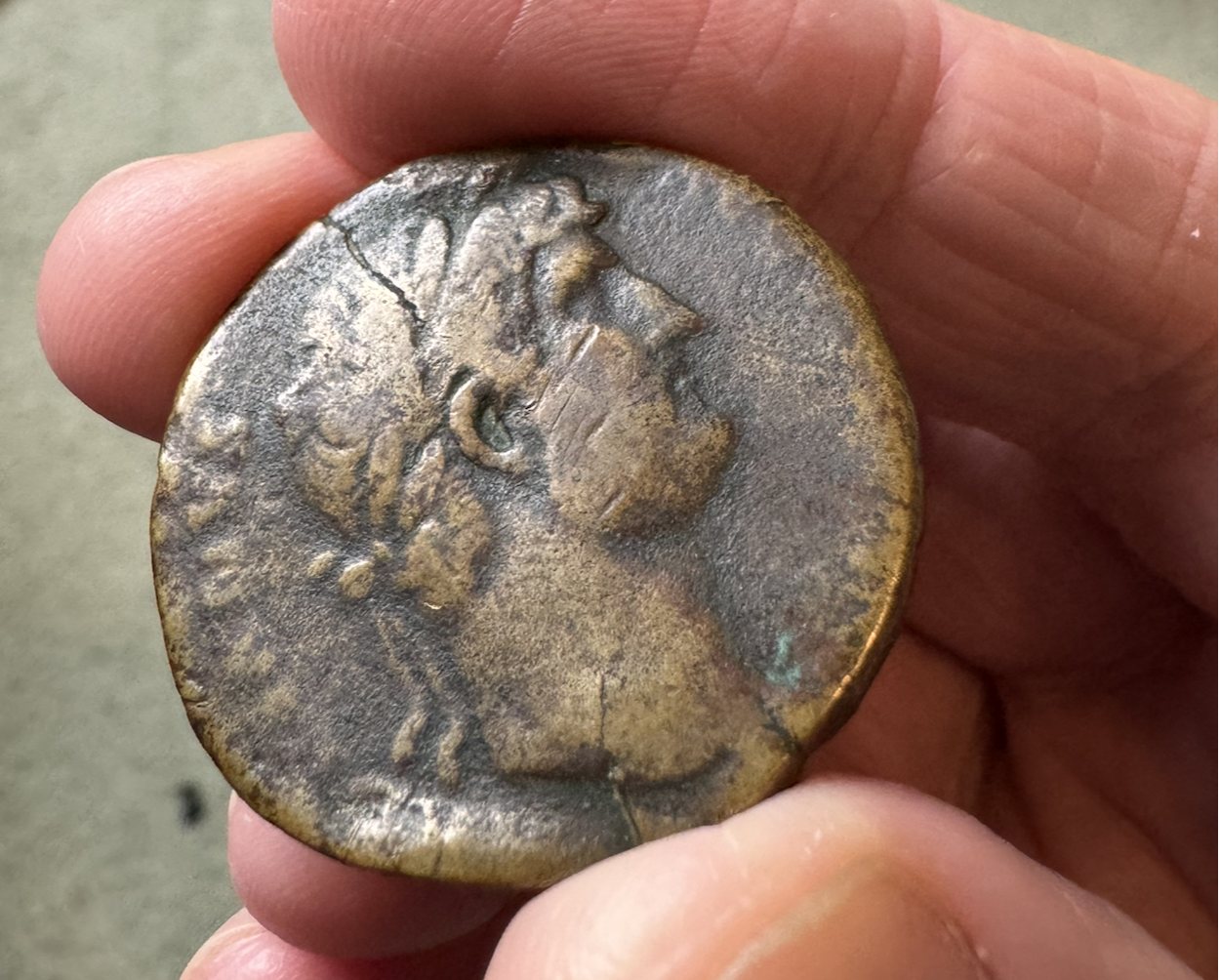
The historical record makes the place more relatable still. Hadrian is considered by most historians to have been a capable, albeit somewhat prickly, administrator who successfully guided the Roman Empire into a period of consolidation and, the Judaean revolt aside, relative calm after the frenetic years of Trajan’s reign, which saw conflicts on numerous fronts ranging from Dacia in eastern Europe to Parthia in the near east.7 There are, however, several strands of evidence in the historical record suggesting Hadrian may have needed regular time away from people and, presumably, from the stresses and frustrations of the job. Cassius Dio wrote of him that:8
On the days that were neither sacred nor suitable for public business he remained at home, and admitted no one, even so much as just to greet him, unless it were on some urgent matter; this was in order to spare people a troublesome duty.
Hadrian was also known for solitary or near-solitary pursuits in modelling, painting, verse and architecture, and by several accounts he was highly sensitive about any perceived criticism of his work.9 Dio records the architect Apollodorus of Damascus falling out of favour, and worse, after slighting the emperor’s own design work.10
The self-contained, almost hermit-like architecture of the Teatro Marittimo aligns closely with the little that we do know of Hadrian’s personality, and at the risk of projecting modern personality types back into the ancient past, it seems reasonable to suggest that Hadrian was somewhat of an introvert. That is not to suggest he was shy, unambitious or lacking in the necessary ruthlessness to get to the top. It is more that he appears to have needed time away in order to recharge, along with the opportunity to pursue the solitary obsessions he clearly loved. The archaeological record at the Teatro Marittimo provides some fascinating inferences about the inclinations and personality of Hadrian.
Elsewhere in the record
There are many other examples of secular seclusion and solitude in the historical record that may have been based at least in part on individual personal choice, and influenced by personality and inclination. Examples cited in the past might include the ornamental hermitages built on eighteenth century British estates,11 the ‘hatter’ huts where men lived solitary lives on nineteenth century Australian goldfields,12 the families who chose isolated lives at remote lighthouse stations, the solitary cabins and remote huts of shepherds, and places of ritual seclusion attested among First Nations peoples in North America and Australia. Then, of course, there are the monastic and eremitic traditions of exclusion, ritual and contemplation, which we are probably more aware of at well-known heritage places such as Skellig Michael, the monastery established on a high rocky island off the south-west coast of Ireland between the sixth and eighth centuries CE. The community there numbered perhaps a dozen, and the genuinely solitary element is the later hermitage cut into terraces on the South Peak, some 200 metres above the Atlantic.1314
While these sites may all have connections with individual preferences for solitude, I am not aware of any published archaeological work that takes personality, or the individual’s desire for solitude, as its primary subject. There is adjacent work, on personhood, on emotion and affect, and on eremitic communities where the driver is read as religious rather than temperamental, and some of it is listed below. Given how much of what we excavate is the residue of people living in close company with one another, the places where somebody arranged to be alone might be worth more attention than it has perhaps received. If for no other reason than to explore how different personalities navigated their needs, or perhaps were unable to, in different periods of history and in different cultural settings.
Is this archaeology of personality an area worth exploring, or possible within the limits of visibility in an archaeological record? I would be keen to hear your thoughts and discuss further.
Image credits
Photographs of the Teatro Marittimo and of the sestertius: Jim Wheeler.
Simplified schematic plan: redrawn for History Journeys from the measured plans in M. De Franceschini, Villa Adriana: mosaici, pavimenti, edifici, L’Erma di Bretschneider, Rome, 1991, pp. 185–198 and 428–436.
Overall view of the Maritime Theatre: after B. Adembri, L. Cipriani and G. Bertacchi, ‘Guidelines for a digital reinterpretation of architectural restoration work’, International Archives of the Photogrammetry, Remote Sensing and Spatial Information Sciences XLII-5/W1, 2017, fig. 1. Reproduced under a Creative Commons Attribution 3.0 licence (creativecommons.org/licenses/by/3.0).
Reading list
Works cited
- Adembri, B., Cipriani, L. and Bertacchi, G. 2017. ‘Guidelines for a digital reinterpretation of architectural restoration work: reality-based models and reverse modelling techniques applied to the architectural decoration of the Teatro Marittimo, Villa Adriana’, International Archives of the Photogrammetry, Remote Sensing and Spatial Information Sciences XLII-5/W1: 599–606.
- Adembri, B., Cipriani, L. and Fantini, F. 2019. ‘The Maritime Theatre at Hadrian’s Villa and Its Decoration: Analysis, Interpretation, and Integration of Digital Models’, in C. Inglese and A. Ippolito (eds), Conservation, Restoration, and Analysis of Architectural and Archaeological Heritage. Hershey: IGI Global, ch. 10.
- Adembri, B., Di Tondo, S. and Fantini, F. 2015. ‘Architecture with concave and convex rhythms and its decoration in Hadrian age: the Maritime Theatre and the southern pavilion of Piazza d’Oro in Hadrian’s Villa’, in Proceedings of ASMOSIA X, Rome, 21–26 May 2012. Rome: L’Erma di Bretschneider, 2015, pp. 3–12.
- Campbell, G. 2013. The Hermit in the Garden: From Imperial Rome to Ornamental Gnome. Oxford: Oxford University Press.
- Cassius Dio, Roman History, Books 69–70, translated by E. Cary and H. B. Foster, Loeb Classical Library, Harvard University Press, Cambridge, 1925.
- De Franceschini, M. 1991. Villa Adriana: mosaici, pavimenti, edifici. Rome: L’Erma di Bretschneider.
- Ehrlich, T. L. 1989. ‘The waterworks of Hadrian’s Villa’, Journal of Garden History 9(4): 161–176.
- Everitt, A. 2009. Hadrian and the Triumph of Rome. New York: Random House.
- Historia Augusta, Life of Hadrian, translated by D. Magie, Loeb Classical Library, Harvard University Press, Cambridge, 1921.
- Horn, W., White Marshall, J. and Rourke, G. D. 1990. The Forgotten Hermitage of Skellig Michael. Berkeley: University of California Press.
- Lawrence, S. 2000. Dolly’s Creek: An Archaeology of a Victorian Goldfields Community. Melbourne: Melbourne University Press.
- MacDonald, W. L. and Pinto, J. A. 1995. Hadrian’s Villa and Its Legacy. New Haven: Yale University Press.
- Roffey, S. 2023. An Archaeological History of Hermitages and Eremitic Communities in Medieval Britain and Beyond: In Search of Solitude. Abingdon: Routledge.
- Salza Prina Ricotti, E. 2000. Villa Adriana: il sogno di un imperatore. Architettura, arte, giardini. Rome: L’Erma di Bretschneider.
- villa-adriana.net. Ongoing documentation of Villa Adriana maintained by M. De Franceschini.
Further reading: the archaeology of the individual
None of the following treats personality directly, but between them they cover most of what archaeology has explored about particular people and private spaces.
- Cahen, D., Keeley, L. H. and Van Noten, F. 1979. ‘Stone Tools, Toolkits, and Human Behavior in Prehistory’, Current Anthropology 20(4): 661–683.
- Deetz, J. 1977. In Small Things Forgotten: The Archaeology of Early American Life. New York: Anchor.
- Dobres, M.-A. and Robb, J. (eds) 2000. Agency in Archaeology. London: Routledge.
- Duru, G. 2018. ‘Sedentism and Solitude: Exploring the Impact of Private Space on Social Cohesion in the Neolithic’, in I. Hodder (ed.), Religion, History, and Place in the Origin of Settled Life. Louisville: University Press of Colorado.
- Fletcher, R. 1995. The Limits of Settlement Growth: A Theoretical Outline. Cambridge: Cambridge University Press.
- Fowler, C. 2004. The Archaeology of Personhood: An Anthropological Approach. London: Routledge.
- Gilchrist, R. 1995. Contemplation and Action: The Other Monasticism. Leicester: Leicester University Press.
- Hillier, B. and Hanson, J. 1984. The Social Logic of Space. Cambridge: Cambridge University Press.
- Johnson, M. 1993. Housing Culture: Traditional Architecture in an English Landscape. London: UCL Press.
- Leroi-Gourhan, A. and Brézillon, M. 1972. Fouilles de Pincevent. Paris: CNRS.
- Meskell, L. 1999. Archaeologies of Social Life. Oxford: Blackwell.
- Tarlow, S. 2012. ‘The Archaeology of Emotion and Affect’, Annual Review of Anthropology 41: 169–185.
- Vincent, D. 2020. A History of Solitude. Cambridge: Polity.
- Whitelaw, T. 1994. ‘Order without architecture: functional, social and symbolic dimensions in hunter-gatherer settlement organisation’, in M. Parker Pearson and C. Richards (eds), Architecture and Order: Approaches to Social Space. London: Routledge.
Notes
- W. L. MacDonald and J. A. Pinto, Hadrian’s Villa and Its Legacy, Yale University Press, New Haven, 1995. The Maritime Theatre is generally placed among the earliest structures of the estate. ↩
- No masonry crossing was built in the original scheme; the island was reached by two small retractable timber bridges, and the marble guide channels in which they ran survive in the floor of the euripus. See MacDonald and Pinto 1995; and E. Salza Prina Ricotti, Villa Adriana: il sogno di un imperatore, L’Erma di Bretschneider, Rome, 2000. ↩
- The built area of the island domus is recorded as approximately 314 square metres in the digital survey reported by Adembri, Cipriani and Bertacchi 2017. The island bath suite comprised a frigidarium with a symmetrical tepidarium and caldarium either side, heated by a praefurnium and hypocaust, with steps leading from the frigidarium down into the euripus, which also served as a natatio. On the identification and interpretation of the individual spaces see MacDonald and Pinto 1995; Salza Prina Ricotti 2000; and B. Adembri, L. Cipriani and F. Fantini, ‘The Maritime Theatre at Hadrian’s Villa and Its Decoration: Analysis, Interpretation, and Integration of Digital Models’, in Conservation, Restoration, and Analysis of Architectural and Archaeological Heritage, IGI Global, Hershey, 2019, ch. 10, which reports the digital survey undertaken with the Istituto autonomo Villa Adriana e Villa d’Este and the Università di Bologna. ↩
- On the building materials and decoration see B. Adembri, S. Di Tondo and F. Fantini, ‘Architecture with concave and convex rhythms and its decoration in Hadrian age: the Maritime Theatre and the southern pavilion of Piazza d’Oro in Hadrian’s Villa’, Proceedings of ASMOSIA X, Rome 2012, published Rome 2015; and Adembri, Cipriani and Fantini 2019, which records Luna marble entablatures, brick and tufa masonry, and the use of local travertine (lapis tiburtinus) for foundations and structural housings. ↩
- On the water engineering of the villa, including the supply, circulation and drainage arrangements serving its many water features, see T. L. Ehrlich, ‘The waterworks of Hadrian’s Villa’, Journal of Garden History 9(4), 1989, pp. 161–176; and MacDonald and Pinto 1995. Ehrlich records that 37 of the 47 water arrangements identified at the villa involved moving rather than still water. ↩
- Several kilometres of service tunnels run beneath the estate, including the Grande Trapezio, a subterranean carriage road wide enough for carts, which kept staff, deliveries and service traffic out of sight. Marina De Franceschini’s Accademia Project, with the speleologists of the Sotterranei di Roma association, traced the subterranean corridors linking the Accademia to the Grande Trapezio, work published in 2012 and widely reported the following year, and further sections continue to be recorded. See M. De Franceschini, Villa Adriana: mosaici, pavimenti, edifici, L’Erma di Bretschneider, Rome, 1991, and the continuing documentation at villa-adriana.net. ↩
- For a full modern biography, and a sympathetic reading of Hadrian’s character and its contradictions, see A. Everitt, Hadrian and the Triumph of Rome, Random House, New York, 2009. ↩
- Cassius Dio, Roman History 69.7.2, translated by E. Cary and H. B. Foster, Loeb Classical Library, Harvard University Press, Cambridge, 1925. Book 69 survives only through the Byzantine epitome of Xiphilinus, so what reaches us is his abridgement of Dio. ↩
- Historia Augusta, Hadrian 15.10–13, which describes him ridiculing, criticising and humiliating professors of the arts as though he were more learned than they, and debating with them through pamphlets and verses; and Cassius Dio, Roman History 69.3.2 on his modelling and painting, and 69.4.6, that he was jealous not only of the living but also of the dead. Both are hostile sources and the Historia Augusta may not be reliable, but they perhaps cast some light on his personality. ↩
- Cassius Dio, Roman History 69.4. Noting that the Apollodorus episode is late, hostile and much debated. ↩
- G. Campbell, The Hermit in the Garden: From Imperial Rome to Ornamental Gnome, Oxford University Press, Oxford, 2013. ↩
- For the domestic archaeology of goldfields huts see S. Lawrence, Dolly’s Creek: An Archaeology of a Victorian Goldfields Community, Melbourne University Press, Melbourne, 2000. ↩
- W. Horn, J. White Marshall and G. D. Rourke, The Forgotten Hermitage of Skellig Michael, University of California Press, Berkeley, 1990. The South Peak hermitage is generally dated to around the ninth century. ↩
- S. Roffey, An Archaeological History of Hermitages and Eremitic Communities in Medieval Britain and Beyond: In Search of Solitude, Routledge, Abingdon, 2023. ↩